
Nov 10, 2026
Top 5 Container Office Uses for Modern Construction Projects
The top five container office uses for modern construction projects are project management offices, temporary offices at remote sites, meeting and training space, security and site-control cabins, and long-term modular offices. A container office is a steel unit, either converted from a shipping container or built for the purpose, fitted with insulation, windows, doors, electrical systems, and ventilation. Factory production shortens site work, and crews can move the units when the job changes. In this guide, I walk through each use, explain how to choose a unit, and show what buyers should check before they order.


Five Container Office Uses on Modern Construction Sites
An easy-to-move site office can be set up on any busy job site for short-term or long-term projects.
1. On-Site Project Management and Administration Offices
Many people work in offices and need a safe place to do their work. A project office is one such place. It's how teams keep track of documents, check on progress, make purchases, meet with clients, and talk on the phone with headquarters. For a small team, a 20-foot unit works well. You can hold meetings and store files in a 40-foot unit or two units connected to each other.
People can choose between single-room, partitioned, and open-plan plans based on how many workers they have and how they work. First, I think you should make a list of the most important things, such as walls, windows, power outlets, air conditioning, data connections, and fire safety. The TYGB two-story flat-pack container office building is good for bigger project teams because the levels can be stacked to make more space in a small space. That's important in places with a lot of people and where every square foot costs money.
2. Temporary Offices for Remote Construction and Infrastructure Sites
Most of the time, there aren't any permanent buildings close to long-distance road, bridge, train, mining, utility, or energy projects. That issue can be fixed with a movable container office, as most of the building is done at the factory before it ships. In 2019, McKinsey & Company said that modular building can cut the time it takes to finish a job by 30% to 50%. Before the delivery, you should go over the routes that will be used, how to get to the site, the condition of the ground, lifting tools, permits, and where to hook up the utilities.
At the start of most projects, the site is surveyed and groundwork work is done. Finally, the goods are unloaded, placed, services are connected, they are inspected, and they are handed over. The weather will then tell you what kind of insulation, ventilation, and air conditioning to use. Insulation comes in many forms, such as rock wool, PIR panels, sandwich panels, and spray foam. Pick based on how hot or cold it is and how many people are there.
3. Meeting, Training, and Welfare Facilities
As well as an office, a container office can be a place to meet with clients, work on ideas, hold safety meetings, or teach people new skills. Think about where people will sit, how they will present, storage, lighting, sound, and ways to get around when making the plan. When you connect units, you can make a room bigger without using the usual building methods. In some welfare units, there are bathrooms, showers, locker rooms, kitchenettes, break rooms, and a place to give first aid. Before you place an order on a US site, you should check with the local government about fire safety, wiring, drainage, water supply, ventilation, and entry. When crews can rest well between shifts, and clients see that the builder keeps the site clean, they will be happy with the interiors and finishes.
4. Security, Monitoring, and Site-Control Offices
People who work as guards, register visitors, control access, or run CCTV all need safe places to work outside. Being close to the main gate makes it easier to see, safer for people and cars to move around, and better for keeping records of the site. A fire alarm system, data cabling, CCTV, access control, distribution boards, lighting inside and out, emergency lighting, and lighting may all be part of the electrical plan.
Faraway things can have solar panels, batteries, smart locks, or remote tracking added to them. Things like steel doors and windows that don't rust, good drains, gaps that are sealed, floors that don't slip, and regular maintenance all affect how well something works in the long run. The uprights and structural supports on TYGB units are thicker and stronger. The units don't bend when they're being moved thanks to the cast-iron corner fittings on top and bottom.
5. Permanent or Semi-Permanent Modular Offices for Growing Projects
Many people think of container offices as short-term, but many of them are used for long-term projects, business operations in remote areas, and expanding company locations. When a building is used for a long time, the foundations, insulation, thermal performance, internal finishes, utilities, code compliance, and ease of entry should all be given more attention. Units can be linked together, stacked on top of each other, or stacked next to each other to make offices, meeting rooms, and lounges.
If you need to move two 20-foot units, you can. One 40-foot unit gives you less room to grow. Part 3103 of the International Building Code talks about short-term buildings and has a 180-day limit. This means that a plan that lasts longer than a year might need full approval for a building that will stay put. Every time someone buys something, I tell them to check with the building police first.
How to Choose a Container Office: Fit, Specifications, and Cost
The thing that matters most in deciding what to buy are how it fits, how much it costs, and what it is used for.
Match the Unit to the Project
Start by figuring out how long the project will last, where it will be done, the weather, how many people will be working on it, how they will get to it, and what it will be used for. A portable office that's 20 feet long might be enough for a quick job. If the site is big, it might need a 40-foot modular building or several of them. For rough or faraway sites, the building needs to be stronger and have its own utilities, insulation, and air conditioning. Some jobs that need to be kept safe may need guard rooms with CCTV, and for long-term jobs, better ends are better.
Another thing I think you should do is compare a container office to site houses, other prefab buildings, and normal buildings. Think about how long it will take to move, deliver, get used to, make changes, keep up, and follow the rules. Repeat use is very important for people who own rental fleets. Shipped flat, put together on site, and then moved to the next job, a unit can make money over several jobs.
Dimensions, Specifications, and Compliance Checklist
ISO 668 says that the outside length of a 20-foot or 40-foot container is 6,058 mm. It is set to be 2,438 mm wide. Wall thickness, insulation, lining, walls, HVAC equipment, and wires all take up room inside that could be used for something else. I don't trust the stated sizes, so I need final precise plans. You should find out about the building's frame, how much it weighs on the floor, the insulation, the doors and windows, the electrical load, the ventilation, the plumbing, the lifting points, the corrosion protection, the certifications, the warranty, and the spare parts in a buying guide.
In the US, it's also important to check for energy rules under the International Energy Conservation Code, exit standards under NFPA 101 (if used), and wind loads under ASCE 7. You should have clear papers for your inspector to look over. The supplier can give it to you.
Cost, Purchase, Rental, and Delivery
The cost depends on the size, the plan, the doors and windows, the insulation, the electrical systems, the HVAC, the plumbing, the finishes, the weight, the distance to be moved, and the installation. When you search for cheap 20ft container offices or 20ft container offices prices, don't just look at the unit price. Also compare how much it costs to ship everything. It's best to rent for short-term or uncertain projects.
It's often cheaper to buy tools that you can use for more than one job. Before you buy from a supplier, make sure you look at their manufacturing skills, quality control, ability to help with customization, certifications, delivery experience, ability to help with installation, warranty, references, and service after the sale. Payment terms are also important for big orders, so find out about them early, before the plans are set in stone.
What TYGB Brings to a Container Office Project?
That's why TYGB tells buyers what they need to know to believe what a seller says.
Structure and Performance
Modular container offices are sold all over the world by Hebei Tianyu Guangbo Integrated House Co., Ltd. (TYGB), in places like Asia, Africa, the US, and Australia. Our units have a Class-A rating for fire safety and can withstand winds of 11 miles per hour and earthquakes of 9 on the Richter scale. We test how long something will last in wind, waves, fire, noise, and water. Special protection systems for the walls and floors keep the inside safe. Normal container weight limits are still met by the unit, even though the clear height inside is only 2.4m. Shipments don't need flat-rack or open-top containers because of this. It helps ship things for less money. You can pick your own styles and colors too.
Production, Packaging, and Delivery
One area of our business is for extra parts. Another is for welding. And a third is for painting and spraying. There are also two automatic lines for making things, as well as CNC machines for bending and forming. A rental company can buy a few sets or a whole fleet because we can make order quantities of any size. Depending on how many items are ordered, the lead time for making them is 4–5 weeks. After looking at your sketches, the conditions of the site, and the building rules in your area, our experts will send you floor plans, 3D models, lists of materials, and a price. This will happen until you say yes. There is strict quality control and full pre-shipment testing before the goods are loaded. Ocean-grade shock-resistant packaging keeps the units safe at sea. We are allowed to bring goods into and out of the country on our own.
Certifications, Installation Support, and Warranty
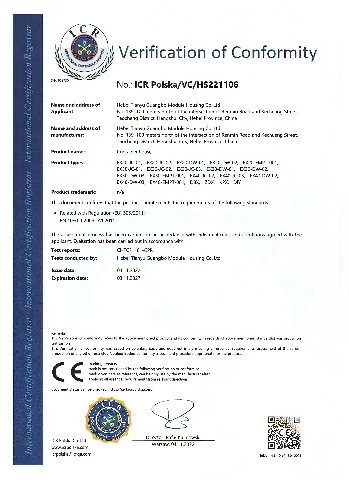
You can find our products certified by CE, SAA, Watermark, ASTM, and UL. We also have ISO 9001, ISO 14001, and ISO 45001 marks to prove it. There are test results that have been approved by SGS, Intertek, and CNAS. People who buy something get test reports, certificates, installation guides in more than one language, and lists of extras. Our engineers work from home and can help installers who have never put together a flat-pack unit through written tips, videos, and online support. We give you maintenance tips and lists of extra parts, and you can always get a real replacement part. The warranty for the frame lasts for 36 months, and the insurance for worn-out parts lasts for 10 months. You can either go to the factory and demo homes in person or via video call.
Conclusion
One of the main uses of a container office on a modern construction site is to manage the project, work from home, hold meetings and provide comfort, keep an eye on things at the site, and provide long-term modular housing. For each use, pieces are made in a workshop and can be shipped and put together quickly. When the project needs to move them, they can be moved. This speed advantage is backed up by a 2019 study by McKinsey that found modular construction can cut schedules by 20 to 50 percent.
The weather, the number of people working on the project, the time it will take, how easy it is to get to, and the cost of utilities will all affect the best choice. People who want to buy something should look at more than just the unit price. They should also look at the end internal dimensions, structural and fire standards, local building rules like the International Building Code, and the total cost of delivery. There are times when renting is better than owning because you can use it more often and save money. Specifications and reviews of suppliers that are very specific lower the risk of buying.
FAQ
Q1: What is a container office?
A: It is made of steel and was either made from a shipping container or changed to look like one. It has windows, insulation, electrical systems, and air flow.
Q2: How are units delivered and installed?
A: Units are sent by truck and sea. When the crews get to a ready base, they join the services and check them out before giving them over. Things like manuals and online instruction are added by TYGB.
Q3: Which sizes are common?
A: Most people who buy choose formats of 20ft or 40ft. Since the space inside is less than the space outside, you should ask for finished plans.
Q4: Should I rent or buy?
A: Rent for short-term or risky projects. Buy something that you will use or service for a long time. You can order a unique layout if the built-in plans don't work for you.
Q5: Can a container office handle hot or cold climates?
A: Yes. It's important to choose the right insulation, ventilation, and HVAC for the job.
Request a Container Office Quote from TYGB
We can help you find the best container office for your next project. As a company that makes container offices, we send layout drawings, 3D renderings, and a quote that is tailored to your project. Based on the number of orders, production wait times are between 4 and 5 weeks. The structural frame comes with a 36-month guarantee. You can or email paulpan@tygbhouse.com with information about what you want to use the unit for, how many people will be living in it, where it is located, the weather, and your plan.
References
1. McKinsey & Company, Modular Construction: From Projects to Products, 2019
2. International Organization for Standardization, ISO 668: Series 1 Freight Containers — Classification, Dimensions and Ratings, 2020
3. International Code Council, International Building Code, 2021
4. International Code Council, International Energy Conservation Code, 2021
5. National Fire Protection Association, NFPA 101: Life Safety Code, 2021
6. American Society of Civil Engineers, Minimum Design Loads and Associated Criteria for Buildings and Other Structures (ASCE/SEI 7-22), 2022
Online Message
YOU MAY LIKE